


domains
A binding domain is that sequence of amino acids in a protein/protein family to which a specific ligand binds. As such, domains are vital to a protein's or enzyme's function. A structural domain is a self-stabilizing structural element that may fold independently of the rest of the protein chain.
Specific examples of domains:
● cadherin repeats
● carbohydrate-recognition domain (CRD)
● caspase recruiting domains, CARD domains
● C-lectin domain (CRD)
● C-type-lectin-like domain (CTLD)
● death domain (DD), death effector domain (DED) binds adaptor protein FADD (Fas-Associated Death Domain)
● EF-hand domains
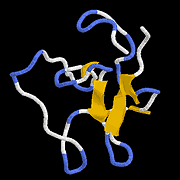
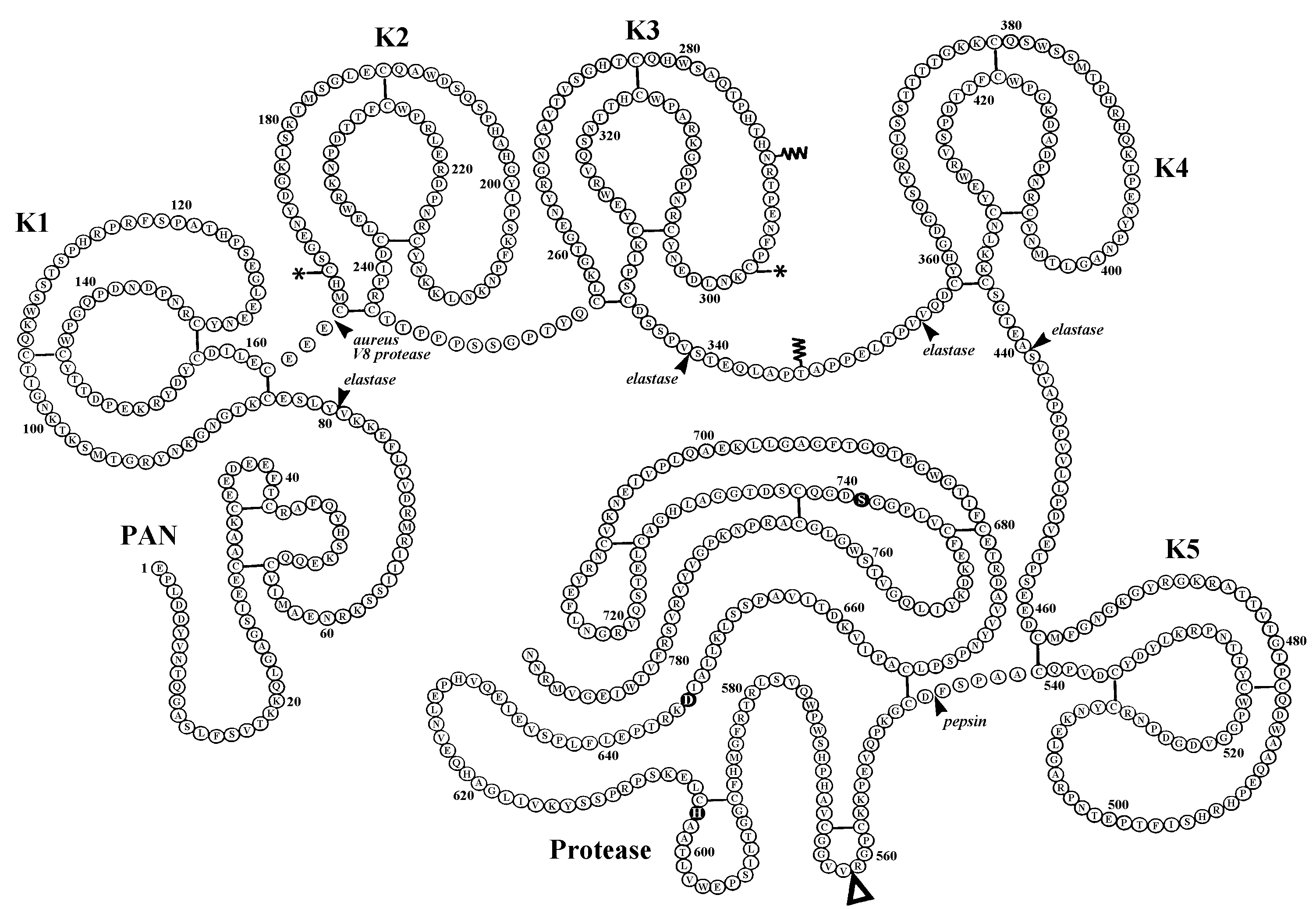
● kringle domains
● pleckstrin homology (PH) domain family
● SH2 domain - Src homology 2 domain = p-Tyr recognition domains
● zinc finger DNA binding domains
Others (on Wiki) Arginine Finger, Armadillo repeats, Basic Leucine zipper domain (bZIP domain), Phosphotyrosine-binding domain (PTB)

Specific examples of domains:
● cadherin repeats
● carbohydrate-recognition domain (CRD)
● caspase recruiting domains, CARD domains
● C-lectin domain (CRD)
● C-type-lectin-like domain (CTLD)
● death domain (DD), death effector domain (DED) binds adaptor protein FADD (Fas-Associated Death Domain)
● EF-hand domains
● kringle domains
● pleckstrin homology (PH) domain family
● SH2 domain - Src homology 2 domain = p-Tyr recognition domains
● zinc finger DNA binding domains
Others (on Wiki) Arginine Finger, Armadillo repeats, Basic Leucine zipper domain (bZIP domain), Phosphotyrosine-binding domain (PTB)
Labels: binding comain, cadherin repeat, CARD, CRD, CTLD, DD, DED, FADD, kringle domain, phosphorylation, SH2, zinc finger
| 0 Guide-Glossary